
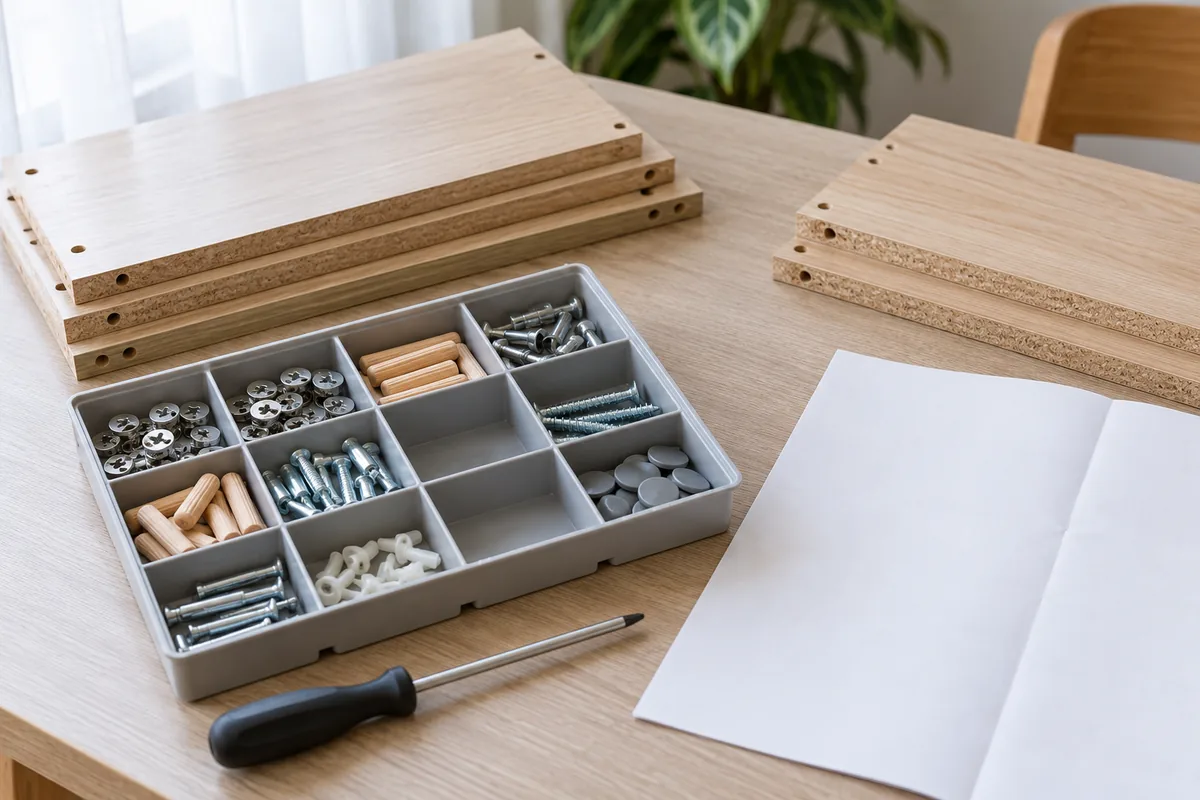
Missing components can easily be confused with an assembly fault, an optional extra that was not included or damaged packaging. A substantive dispute requires comparing the agreed delivery contents with what was actually received and preserving information about the set's condition before it changes.
Establish which document defines the contents
Gather the contract, specifications, order, product listing as of the purchase date, instructions and the manufacturer's parts list. Distinguish documentation for this particular model's contents from a similar advertising image. Record the variant designation, since the same trade name may cover several supply configurations.
Record the unpacking result
If the box is unopened, photograph its overall appearance, damage and labeling, then show the contents in sequence. If the product has already been unpacked, do not stage a second opening as the original: describe the actual sequence and identify who was present at receipt.
- Lay out the parts so the complete set and individual items can be linked.
- Keep bags, inserts, seals and shipping packaging.
- Distinguish a genuinely missing part from one with a different shape or design.
- Check quantities for each item, rather than just the box's total weight.
- Note whether any contents were handed to an assembler or service provider.
List the discrepancies
A table with four fields is useful: documented item, expected quantity, quantity actually received and supporting evidence. For example: “mounting rail in the specifications—two expected, one received, overall view of the set in photo No. …”. An empty organizer compartment does not by itself establish which part should have occupied it.
Distinguish the facts from their consequences
An absent item and inability to use the product are different questions. For one product, a missing element prevents safe use; for another, it is an additional accessory. Technical significance is established from the part's purpose, design and documentation, rather than its size or price alone.
Replacing fasteners yourself with an arbitrary alternative may alter the object and cause new damage. Before intervening, document the condition and agree on further actions, particularly if examination of the defect's causes is planned.
What to provide for a preliminary assessment
Prepare a brief timeline of receipt, unpacking and assembly, the documents, an overall view of the contents and a separate list of missing items. Keep the formal claim and the seller's response. The expert examines the actual contents and technical significance of discrepancies; the choice of legal remedy also depends on the contract and purchase circumstances.
If the original condition has not been preserved, say so explicitly. Photos, correspondence and records may help, but their insufficiency must not be concealed by definitive assertions about what happened before inspection.